


 Deutsch
 English
 Español
 Français
 Nederlands
 Português


 Share
Share




The U.S. Supreme Court's February 20, 2026 ruling in Learning Resources, Inc. v. Trump striking down IEEPA tariffs — followed by the Court of International Trade's May 7, 2026 rejection of Section 122 levies — has created the most consequential trade-law vacuum since the Smoot-Hawley era. The IEEPA tariff ruling and Section 122 collapse have left an estimated $25 billion in collected Section 122 duties in legal limbo and pushed 65% of global firms to rethink sourcing, accelerating a permanent shift from just-in-time to just-in-case supply chains.
What Are IEEPA Tariffs and Section 122 Authority?
The International Emergency Economic Powers Act (IEEPA) allows the president to regulate international commerce during a declared national emergency. Section 122 of the Trade Act of 1974 permits temporary import restrictions to address large and serious balance-of-payments deficits. The Supreme Court in February held that IEEPA does not authorize broad tariff powers; the administration responded by reimposing a 10% global surcharge under Section 122, which the CIT ruled unlawful in May 2026. This legal whiplash has roiled trade law litigation and exposed the fragile foundations of emergency tariff authority.
From IEEPA to Section 122: A Timeline of Legal Collapse
February 20, 2026: Supreme Court Strikes Down IEEPA Tariffs
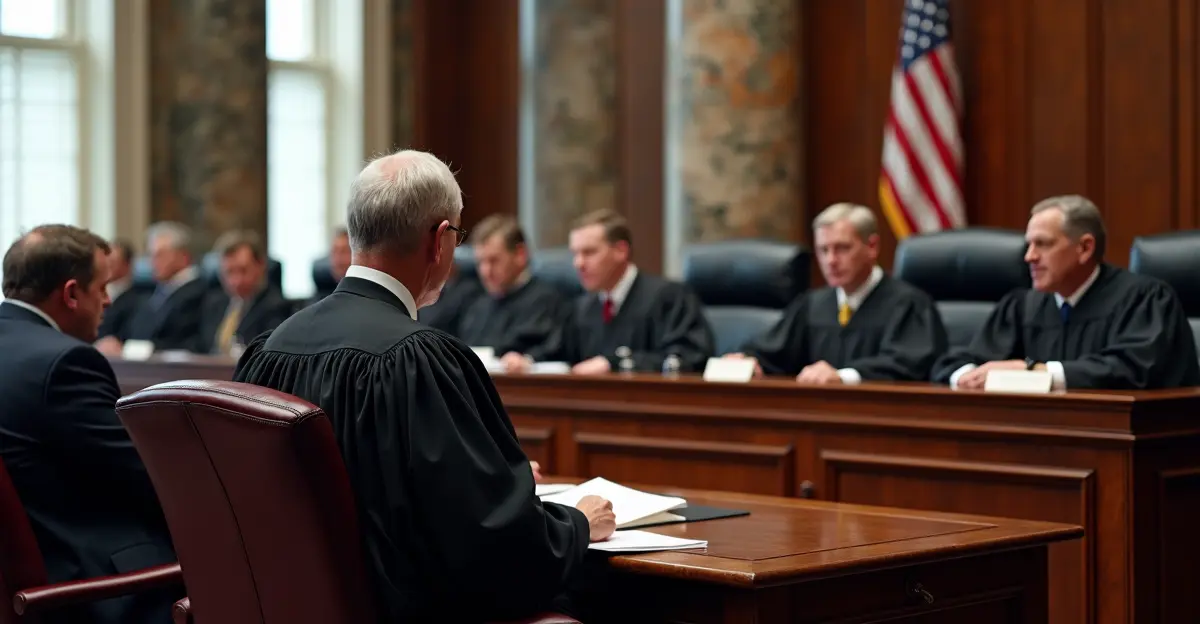
On February 20, 2026, the Supreme Court ruled 6-3 that the administration exceeded its authority under IEEPA, invalidating emergency tariffs on imports from Canada, Mexico, China, and other countries. Chief Justice John Roberts wrote that “the power to regulate is not the power to tax.” The decision voided duties that had already generated roughly $170 billion in refund claims. Within hours, the White House pivoted to Section 122, imposing a 10% across-the-board tariff effective February 24, 2026, for up to 150 days. Legal observers immediately warned of another challenge, and the 2026 tariff policy showdown began.
May 7, 2026: Court of International Trade Rules Section 122 Unlawful
On May 7, 2026, the CIT ruled 2-1 that the Section 122 tariffs were unlawful because the administration failed to show the “large and serious balance of payments deficits” required by statute. The permanent injunction applied only to named plaintiffs, but the ruling cast a shadow over all importers. With $25 billion in Section 122 duties already collected and the 150-day window set to expire in July 2026, importers face unprecedented refund and compliance uncertainty.
Why the Legal Vacuum Is Accelerating Supply Chain Restructuring
The back-to-back defeats have convinced corporate boards that emergency tariff policy is no longer predictable. According to a mid-2026 survey by a major logistics group, 65% of firms have altered sourcing patterns, up from 38% a year earlier. The shift from just-in-time supply chains to just-in-case inventory models is now a board-level priority, not a theoretical exercise.
Three regions are emerging as structural winners. Vietnam has posted double-digit export growth for the fifth consecutive quarter, driven by electronics and furniture orders diverted from China. Mexico's nearshoring boom has pushed its share of U.S. imports to a record 16.8% in the first half of 2026, while Mediterranean hubs such as Morocco, Turkey, and Egypt are attracting European and U.S. manufacturers seeking shorter, tariff-hedged routes. This realignment is reshaping global trade flows 2026 and challenging China's central role.
Winners and Losers in the 2026 Trade Reset
Structural Winners
- Vietnam: record export growth and manufacturing investment
- Mexico: record 16.8% share of U.S. imports amid nearshoring
- Mediterranean hubs: Morocco, Turkey, Egypt gain tariff-hedged orders
Structural Losers
- U.S. importers facing $25 billion in refund uncertainty
- China: export volumes erode as firms diversify
- Just-in-time logistics providers losing contracts to buffer-stock models
What Experts Are Saying
“The CIT decision didn't just pause tariffs; it pulled the constitutional rug out from under the entire emergency trade framework,” said Elena Vasquez, a Georgetown trade-law professor. “Companies are now pricing in the risk of sudden tariff reversals, and that permanently raises the cost of cross-border sourcing.”
Trade economist Marcus Chen added that the collapse of Section 122 has triggered a “generational reset” in US-China commercial ties, with both governments signaling less appetite for negotiation and more focus on industrial self-sufficiency. The US-China trade relationship now faces a longer, colder detente. Analysts also point to Mexico nearshoring boom as evidence that proximity and policy certainty now outweigh labor-cost advantages.
FAQ: IEEPA Tariff Ruling and Section 122 Collapse
What did the Supreme Court rule on IEEPA tariffs in 2026?
The Court ruled 6-3 on February 20, 2026, that IEEPA does not authorize the president to impose tariffs, invalidating emergency duties and triggering roughly $170 billion in refund claims.
Why did the CIT strike down Section 122 tariffs?
The Court of International Trade ruled 2-1 on May 7, 2026, that the administration failed to demonstrate the required “large and serious balance of payments deficits” and misused Section 122 as a substitute for IEEPA.
How much money is affected by the Section 122 ruling?
An estimated $25 billion in Section 122 duties have been collected and are now subject to refund litigation, with the 150-day tariff window expiring in July 2026.
Which countries are winning from the trade reset?
Vietnam, Mexico, and Mediterranean nearshoring hubs such as Morocco and Turkey are seeing the largest gains as firms diversify away from China.
What happens next in the legal fight?
The administration is expected to appeal the CIT ruling to the Federal Circuit, but with the Section 122 window closing in July, importers are bracing for a chaotic transition.
Conclusion: A Generational Trade Reset
The IEEPA tariff ruling and Section 122 collapse have done more than invalidate emergency levies; they have dismantled the predictability that underpinned global supply chains for three decades. As firms shift to just-in-case models and regional hubs consolidate, 2026 may be remembered as the year the world's trading system permanently fractured. For importers, the message is clear: the era of cheap, frictionless globalization is over.



Follow Discussion